November 3, 2026 · admin
Manufacturers searching for an ultrasonic plastic welding machine Kakinada solution can use ultrasonic joining for suitable electrical switches, sockets and enclosure components. JSB Ultrasonic (JSB Automation) supplies and services customers in Kakinada from its base at N-76, DSIIDC Industrial Area, Sector 1, Bawana, New Delhi. Support includes machine supply, delivery, installation, sample trials on customer parts and after-sales service.
For an electrical product, the correct machine is not selected by product name alone. The plastic material, joint design, component size, appearance requirements, production volume and required process control all affect the recommendation. JSB can review your parts, conduct sample trials and help define the machine, horn and fixture arrangement before you proceed.
Why ultrasonic welding suits electrical plastic components
Ultrasonic plastic welding uses high-frequency mechanical vibration to generate heat at a designed joint interface. The parts are held together under pressure while the horn transfers vibration to the upper component. When the joint reaches the required melt condition, the vibration stops and the assembly is held during cooling.
For switches, sockets and enclosures, this process is generally considered when a repeatable thermoplastic joint is needed without relying on screws, adhesives or external heating. The result depends on the component design and process settings. Ultrasonic welding is not automatically suitable for every plastic combination or every enclosure geometry, so trials on actual customer parts are important.
Electrical components may contain narrow walls, ribs, terminals, inserts, openings and cosmetic surfaces. These details influence how vibration travels through the assembly. A practical welding assessment should therefore examine the complete component rather than only the outer shape.
Applications for switches, sockets and enclosures
Electrical switches
A switch housing may need to hold internal parts in position while maintaining the intended external appearance. Ultrasonic welding can be evaluated for joining compatible housing halves or securing selected plastic features. The horn must contact a suitable area, and the fixture must support the housing without distorting the operating mechanism.
During a sample trial, the process team can inspect joint formation, housing damage, flash, dimensional change and the function of the assembled switch. The welding parameters should be established from the part response rather than copied from an unrelated product.
Electrical sockets
Socket assemblies can include plastic covers, bases, internal cavities and areas that must remain clear for terminals or contacts. A welding system for these parts requires careful access planning. The horn face should apply energy to the intended joint while avoiding sensitive features.
Part nesting is equally important. If the socket is not located consistently, weld depth and pressure can vary from one cycle to another. A dedicated fixture can help control the position of the components and protect areas that should not carry welding force.
Electrical enclosures
Small plastic enclosures may be joined around a perimeter, at selected bosses or along designed energy-director features. The best joint arrangement depends on the enclosure size, wall thickness, material and whether the assembly needs to be opened later for maintenance.
For a sealed or closed housing, the design team should consider the required joint path, internal clearances and the effect of welding on nearby components. Ultrasonic welding may be evaluated where the thermoplastic parts and joint design allow the process to produce the required mechanical connection.
What to check before selecting a machine
A buyer or production engineer should collect the following information before asking for an ultrasonic plastic welding machine in Kakinada:
- Material: Identify the resin used in each mating part. Materials such as ABS, PP, PC, PVC, PE, nylon and acrylic can respond differently to ultrasonic energy, and the exact grade or blend also matters.
- Part geometry: Share drawings, CAD data or representative samples showing wall thickness, ribs, bosses, joint length and clearances.
- Joint function: Explain whether the weld must hold a cover, resist handling, prevent separation or meet another product-specific requirement.
- Appearance: Mark visible surfaces and areas where flash, witness marks or minor cosmetic changes are unacceptable.
- Production method: State whether the assembly is manual, semi-automatic or intended for integration into a wider production process.
- Inspection: Define how the welded part will be checked, such as visual inspection, dimensional checks, pull testing or functional testing selected by the manufacturer.
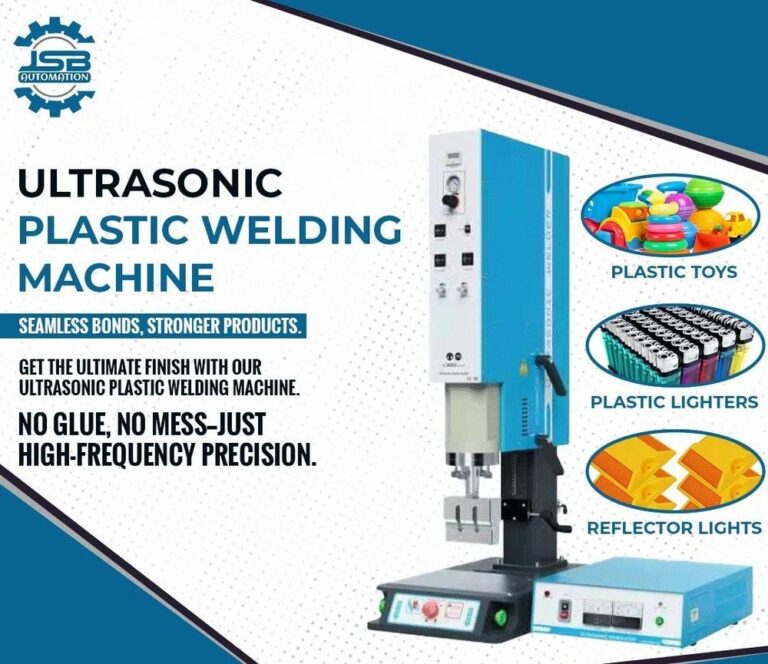
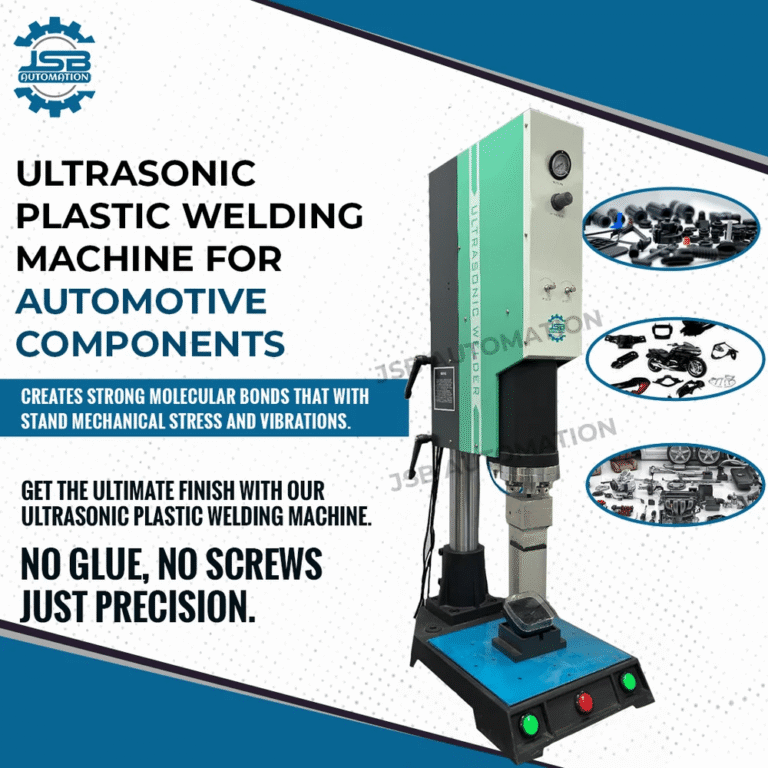
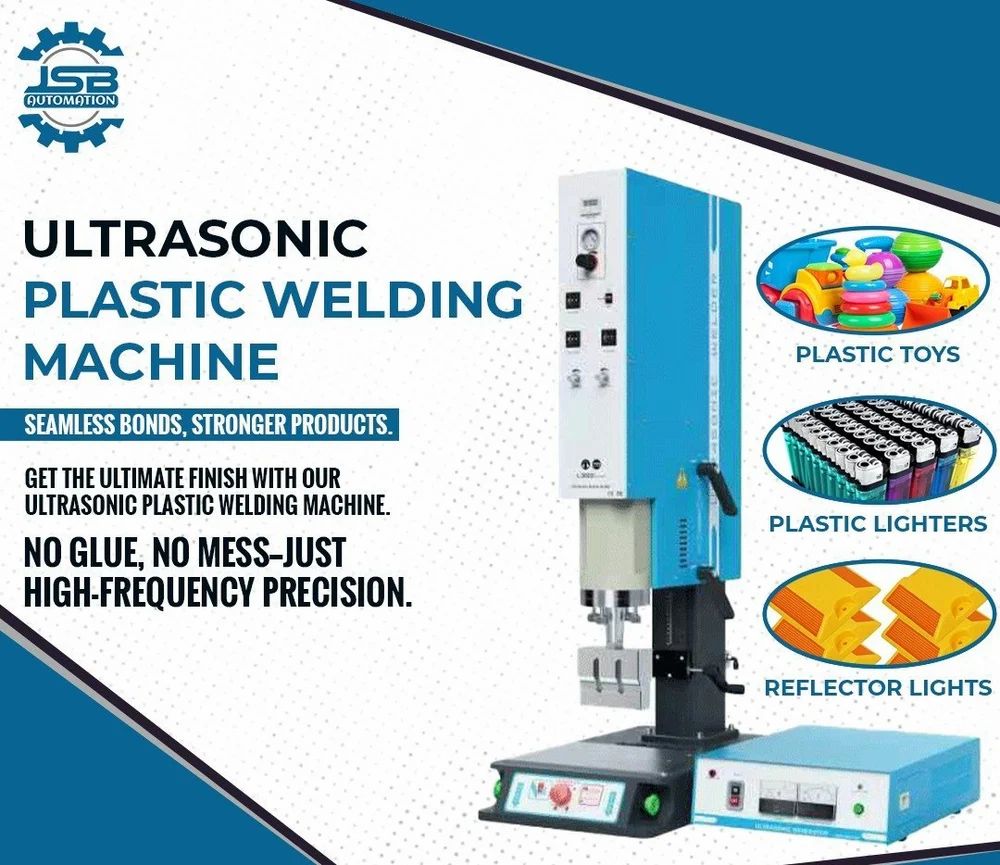
These details help determine the suitable frequency, power range, welding mode, actuator arrangement and tooling. JSB’s listed Ultrasonic Plastic Welding Machine is a 15 kHz, 1500 W, semi-automatic machine with power-mode welding. Its listed suitable materials include acrylic, PC, PP, PVC, PE, nylon and ABS. Whether this configuration suits a particular switch, socket or enclosure must be confirmed through application review and trials.
Horn and fixture design for electrical parts
The horn is the tool that transfers vibration to the part. Its face needs to match the intended contact area and provide stable energy transfer. A horn that touches a delicate surface, bridges unsupported features or contacts an unsuitable location may create inconsistent results or cosmetic damage.
Fixtures perform a different but equally important role. They locate the lower component, resist the welding force and prevent movement during the cycle. For electrical housings, the fixture may need relief around terminals, cavities and projecting features. It should support the part close to the joint without obstructing the horn.
JSB provides custom horns and fixtures as part of its stated services. The tooling concept should be developed from the actual parts and joint design. If the product changes, the horn or fixture may also need review.
How sample trials reduce selection risk
A sample trial is useful because ultrasonic welding performance depends on the relationship between the machine, tooling, parts and process settings. A trial on customer parts can help identify whether the proposed joint can be welded and what design or tooling changes may be needed.
A sensible trial process includes:
- Review the part material, drawings, assembly sequence and quality requirements.
- Examine the proposed energy-director or joint features and identify areas requiring support.
- Set up suitable tooling and select initial process conditions.
- Produce sample assemblies and inspect the joint, cosmetics, dimensions and function.
- Adjust the process or recommend part, horn or fixture changes where required.
Trial results should be judged against the customer’s own acceptance requirements. A visually acceptable weld is not necessarily sufficient if the assembly must also meet a specified mechanical or functional need.
For additional background, see JSB’s guide to ultrasonic plastic welding for the electronics industry and the guide to plastic materials suitable for ultrasonic welding.
Supply, installation and after-sales support in Kakinada
JSB Ultrasonic (JSB Automation) supplies and services customers in Kakinada, Andhra Pradesh, from Bawana, New Delhi. The support scope includes machine supply, delivery, installation, sample trials on customer parts and after-sales service. JSB also provides spare horns, along with custom horns and fixtures where the application requires them.
The installation stage should cover machine operation, tooling fitment, basic process setup and safe use. Production teams should also establish their own inspection method and operating instructions for the specific switch, socket or enclosure being manufactured.
When requesting an assessment, send part samples or drawings, material details, photographs of the assembly, expected production method and the main welding concern. This gives the JSB team a practical basis for discussing the machine requirement.
Frequently asked questions
Does JSB supply and service machines in Kakinada?
Yes. JSB supplies and services customers in Kakinada from its base in Bawana, New Delhi. This includes machine supply, delivery, installation, sample trials on customer parts and after-sales service.
Can JSB test our electrical switch, socket or enclosure parts?
Yes. JSB offers sample trials on customer parts. Share representative components, material information and the required joint or functional outcome so the application can be reviewed.
Will one ultrasonic welding machine suit every electrical enclosure?
No. Suitability depends on material, part geometry, joint design, size, appearance requirements, production method and tooling. A sample trial is recommended before finalising the machine and tooling arrangement.
Can JSB provide a horn and fixture for our part?
JSB provides custom horns and fixtures. The design should be based on the actual components, joint location, support requirements and access available during welding.
To discuss your electrical parts, arrange a sample trial or review an ultrasonic plastic welding machine requirement for Kakinada, contact JSB Ultrasonic (JSB Automation).