October 28, 2026 · admin
JSB Ultrasonic (JSB Automation) is an ultrasonic plastic welding machine supplier in Kundli, serving manufacturers in Kundli, Sonipat district, Haryana, from its base at N-76, DSIIDC Industrial Area, Sector 1, Bawana, New Delhi. JSB supplies machines, arranges delivery, installs equipment, conducts sample trials on customer parts and provides after-sales service for suitable applications.
For a production engineer, plant owner or buyer, choosing a supplier is not only about selecting a machine from a catalogue. The welding result depends on the plastic materials, joint design, component size, production volume, required appearance and the level of process control needed. JSB can discuss these requirements, review customer parts and help identify a practical ultrasonic welding approach for the application.
Ultrasonic welding support for Kundli manufacturers
Kundli and the wider Sonipat district include manufacturing activity involving plastic components, packaging, automotive-related parts, electronics, consumer products and other industrial goods. These applications can involve joining two moulded plastic parts, attaching a smaller component, sealing a housing or producing repeatable assemblies.
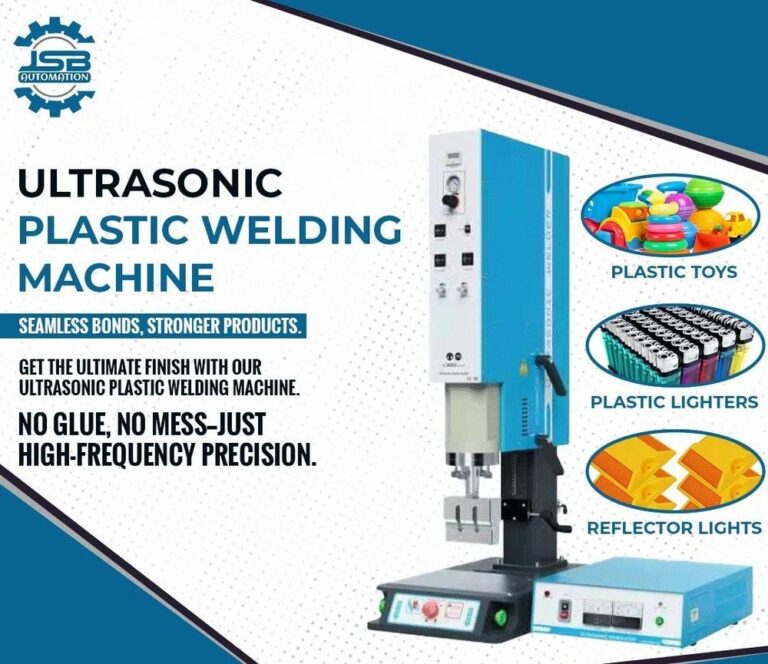
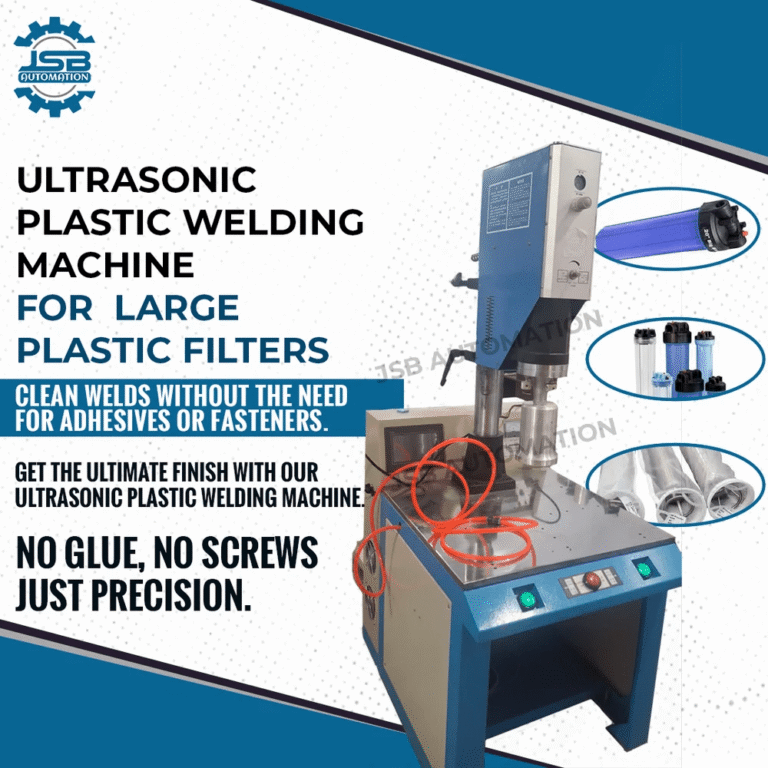
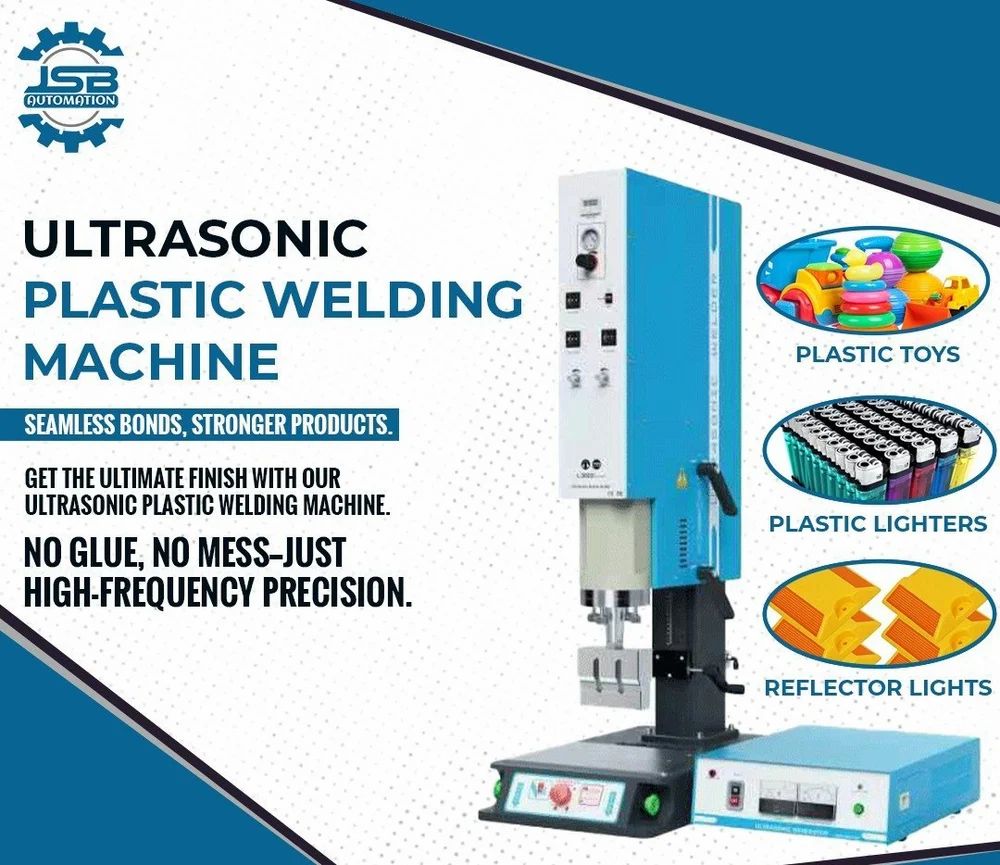
Ultrasonic welding uses mechanical vibration to create heat at a designed joint interface. The machine applies controlled pressure while the horn transfers vibration to the parts. When the joint is designed correctly, the plastic softens locally and forms a bond without needing separate adhesive or fasteners. The correct settings depend on the material combination, part geometry, joint design, tooling and quality requirements.
JSB supplies and services customers in Kundli with the following support:
- Ultrasonic plastic welding machine supply for suitable production applications
- Delivery and installation at the customer’s facility
- Sample trials using the customer’s actual parts
- Custom horns and fixtures for part-specific requirements
- After-sales service and support
- Spare horns when replacement tooling is required
How to choose an ultrasonic plastic welding machine
A useful machine selection starts with the part rather than a preferred frequency or power rating. Buyers should prepare representative components and define what the finished assembly must achieve. Important questions include:
- Which plastics are being joined, and are they compatible for ultrasonic welding?
- What is the joint type: a weld, staking operation, insertion, sealing or another assembly?
- Where is the weld line located, and can the horn contact the part squarely?
- What cosmetic limits apply to marks, flash, indentation or surface change?
- How consistent are the moulded parts in dimensions and material condition?
- What production quantity and operating cycle are expected?
- Will the machine be operated manually, semi-automatically or as part of a more integrated process?
These details help the supplier assess the required machine configuration and tooling. A machine that works well for one component may not be appropriate for another, even when both parts use a similar plastic. Part stiffness, wall thickness, energy director design and the way the component is supported can all affect the result.
Material and joint evaluation
Ultrasonic welding is commonly considered for thermoplastic materials such as PP, ABS, acrylic, PC, PVC, PE and nylon, but the outcome depends on the specific parts and grade. Material compatibility, filler content, moisture, moulding quality and surface condition can influence the weld.
The joint should provide a controlled location for energy transfer. An energy director or other suitable joint feature can concentrate vibration at the intended interface. The mating parts also need adequate support so that they do not move unpredictably during the weld. If the part is flexible, thin or irregular, the fixture design becomes especially important.
Frequency, power and operating mode
Ultrasonic machines are available with different frequency and power configurations. Lower-frequency systems may be considered for larger or more demanding components, while higher-frequency systems can be suitable for smaller parts and finer features. This is not a universal rule; the correct choice depends on the part, material, joint and tooling.
Power rating alone does not determine weld quality. The process can also involve amplitude, pressure, trigger force, weld time, hold time, energy and position or depth control. The most suitable control mode depends on how the weld should be monitored and what variation is acceptable in production. During a sample trial, these factors can be assessed on the customer’s parts instead of being selected only from general assumptions.
Why sample trials matter before purchase
A sample trial provides a practical way to examine whether the proposed welding method suits the actual component. The trial should use production-representative parts, the intended joint area and a fixture arrangement that reflects the proposed process.
During evaluation, the buyer and supplier can review:
- Weld strength and separation behaviour
- Visual appearance around the weld
- Flash, marking or deformation
- Part alignment and repeatability
- Cycle and handling requirements
- Whether the proposed horn and fixture reach the joint correctly
A trial does not replace production validation, but it gives the buyer useful information before finalising a machine and tooling arrangement. It can also identify design changes that may improve welding consistency, such as modifying the joint feature, adding support ribs or improving part location.
Tooling: horns and fixtures for the part
The ultrasonic horn is the component that transfers vibration to the workpiece. Its contact face must match the application and reach the intended weld area without damaging surrounding features. Horn design can depend on the part shape, material, weld pattern and available access.
The fixture supports the lower component and maintains alignment during the cycle. A fixture that allows movement, concentrates unwanted stress or fails to support thin walls can produce inconsistent results. For this reason, custom horns and fixtures may be necessary when standard tooling is not suitable.
JSB provides custom horns and fixtures as part of its application support. Buyers should share drawings, samples or clear information about the component, joint location and assembly requirements when requesting an evaluation.
Installation and after-sales service in Kundli
Buying a machine is the beginning of the production setup. Correct installation helps the operator understand machine operation, part loading, tooling placement and basic process settings. The installation also provides an opportunity to review the intended workflow and identify practical handling issues.
JSB supplies and services Kundli customers from Bawana, New Delhi. This includes machine delivery, installation, sample trials on customer parts and after-sales service. Spare horns are also available when replacement tooling is needed. Service requirements can vary according to machine configuration, tooling condition, usage and the nature of the production issue.
For broader regional context, buyers can also read the page about ultrasonic plastic welding machine manufacturers in Sonipat. The present guide remains focused on selecting a supplier and planning a suitable welding solution for a Kundli application.
Questions to discuss with a supplier
Before requesting a quotation or machine recommendation, prepare the following information:
- Part drawings, samples or photographs showing the proposed weld area
- Plastic material details and any known additives or fillers
- Required joint strength and visual expectations
- Current assembly method, if the process is being replaced
- Expected production quantity and operator workflow
- Available electrical and floor-space conditions
- Any requirement for custom horns, fixtures or spare tooling
Buyers comparing alternatives can use JSB’s guide on how to choose the right ultrasonic welding machine. If the main concern is budgeting, the ultrasonic plastic welding machine price guide explains why machine configuration, tooling and application requirements affect the overall purchase decision.
Frequently asked questions
Does JSB supply and service machines in Kundli?
Yes. JSB supplies and services machines in Kundli from its base in Bawana, New Delhi. Support includes machine supply, delivery, installation, sample trials on customer parts and after-sales service.
Can JSB test my plastic parts before I purchase a machine?
Yes. JSB offers sample trials on customer parts. The trial helps evaluate the joint, tooling approach and process suitability for the specific component.
Does every plastic component need a custom horn and fixture?
Not necessarily. The requirement depends on the part shape, joint location, access, support and production process. JSB can assess whether standard tooling is suitable or whether custom horns and fixtures are needed.
What information should I send when asking for a machine recommendation?
Share part samples or drawings, material details, weld location, required output, quality expectations and any existing assembly information. These details help JSB discuss a suitable machine and trial plan.
To discuss your parts, arrange a sample trial or review a machine requirement for Kundli, contact JSB Ultrasonic. The team can help you evaluate the application, tooling and installation needs before you proceed.